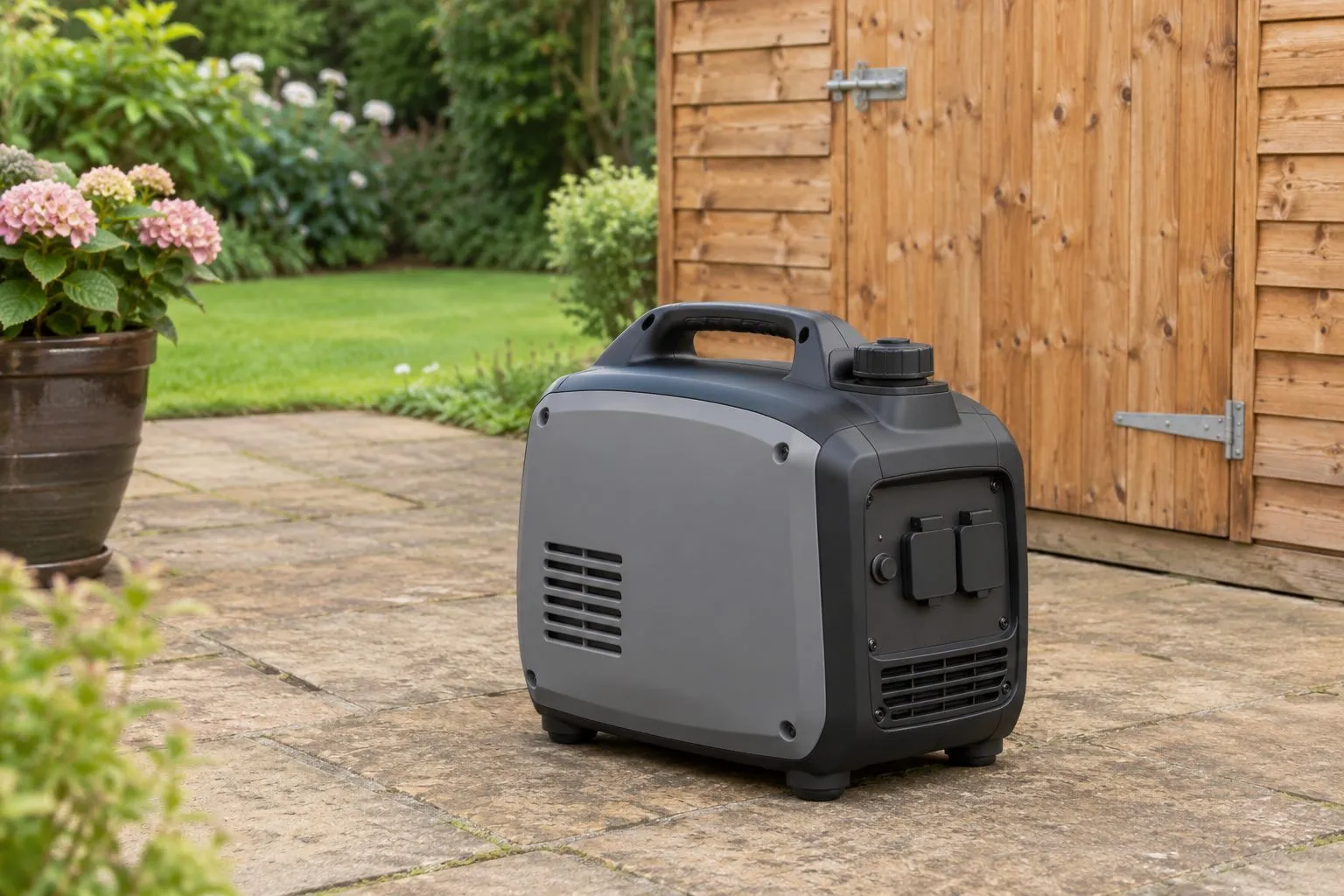
For the essentials in a power cut, a fridge-freezer, the internet, phones, a TV and lights, a 2 kW inverter generator is plenty: by our adaptation of Honda's sizing method they need about 1,050 W to 1,150 W. Add a microwave and it calls for about 2,600 W to 2,850 W, more than a 2 kW model, though the microwave on its own, at up to 1,300 W, is well within one. A kettle or an electric heater, at 2,000 to 3,000 W each, is too much for the usual 2 kW models on top of everything else.
Buying through our links costs you nothing extra. Some of them earn us a small commission, and that's what keeps the site going: it pays for the time it takes to keep our picks and figures up to date. Thank you for helping. How we choose and how we earn.
1,050 W to 1,150 Wthe essentials: fridge-freezer, internet, phones, a TV and lights
2,600 W to 2,850 Wthe same, plus a microwave
2,000 to 3,000 Wa kettle or an electric heater, each
How to work it out
Honda UK's method has three steps (we change one detail, explained under the example):
Add up the running watts of everything you'll have on at once: "the continuous power an appliance needs to operate".
Add the biggest starting surge. Fridges, freezers and other motors draw a burst when they start, "significantly higher than the wattage required to run an appliance once it's got going".
Add a margin of 20-30%, so the generator isn't working flat out.
Published start-up figures for a fridge or freezer vary from about 400 W to 1,500 W; Honda gives 400-600 W for a compressor fridge, and Sealey says motors such as freezers start at about three times their running wattage. Our sizer allows 600 W for a modern fridge-freezer.
A worked example
The essentials, at the top of each appliance's running range
From the appliance figures in our sizer. We add only the fridge's extra draw at start-up (600 W less its 150 W running draw); Honda's own example adds the whole figure, about 1,240 to 1,340 W for the essentials.
What is an inverter generator?
A generator whose electronics turn the engine's output into steady mains-quality power. Honda says inverter technology "produces electricity as good as that in your home" and is "ideal for powering the most sensitive electronic equipment", with "greater fuel efficiency and less noise". Sealey's guide says that for televisions and laptops "you will need to purchase an Invertor Generator". The catch is the price: Honda calls them "on the expensive side".
Plugging into the house wiring
A portable generator powers appliances plugged into its own sockets. Connecting one to your home's wiring is a job for an electrician: SSEN says "Only a qualified electrician can connect a generator safely", and SP Energy Networks says the incoming supply "must be switched off and isolated" first, to protect engineers working on the lines.
3,200 W running, 3,500 W peak, two UK sockets and electric start: 8.5 hours from 8.3 litres at half load. At 44 kg it comes on wheels with a folding handle.
22.5 kg; two UK sockets; up to 3.6 hours at half load from 3.5 litres. In stock when the Hyundai wasn't.
Pramac P3500i
3,300 W peak, 3,000 W running
49.5 kg; two UK sockets and electric start; 61 dB at 7 m, a 10-litre tank.
Generator or power station?
A generator runs as long as you have fuel, but it has to stay outdoors. A portable power station is usually quiet, though its fans can be heard, can sit indoors next to the fridge, and needs no fuel, but holds a fixed amount of energy. Six questions about your home give an answer: Which backup power?