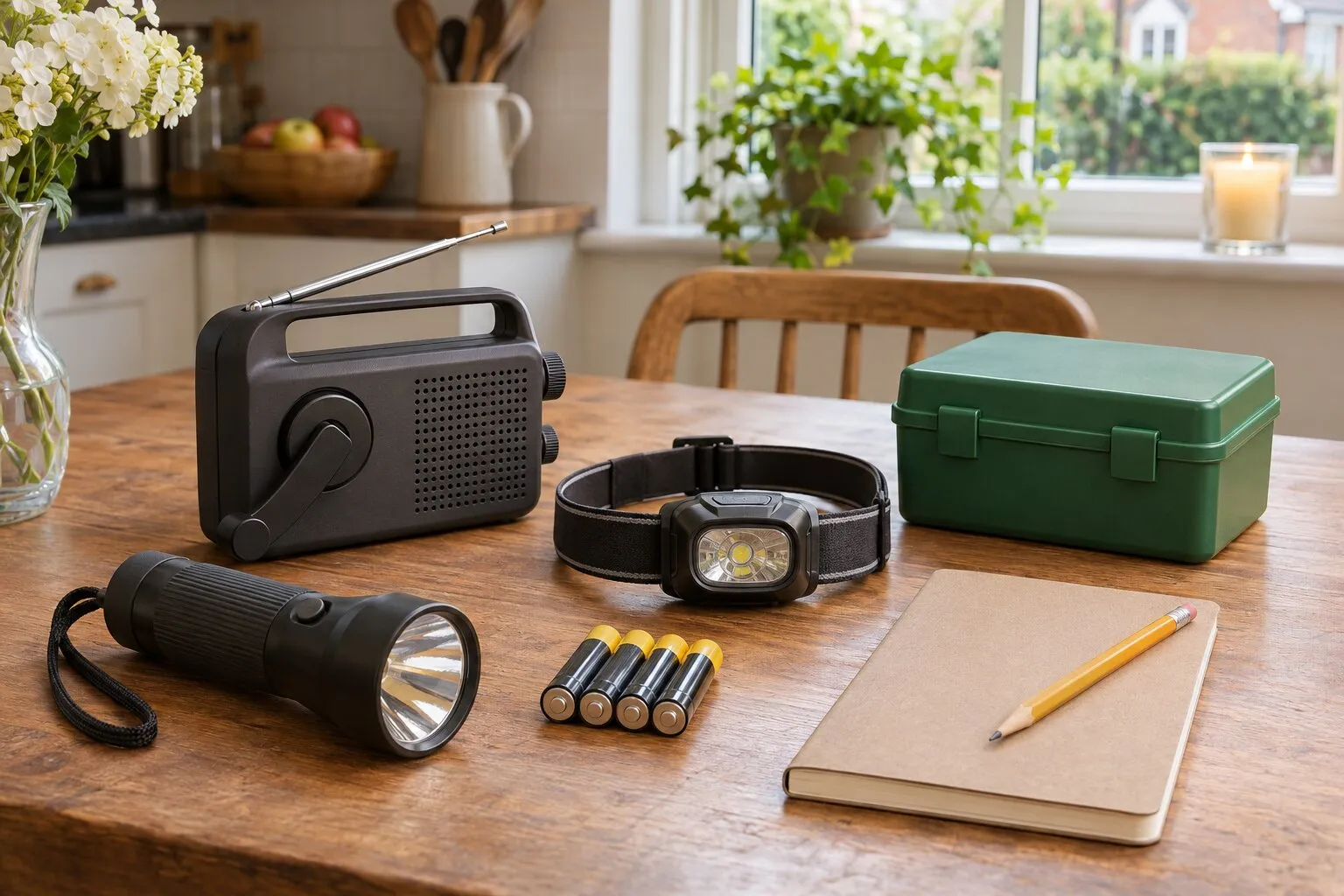
Home emergency kit list: the 72-hour kit
The short list worth keeping in a cupboard, so your household can manage for three days if the power, water or shops are off. It's built on the government's Be Ready checklist, with a grab bag for leaving in a hurry. Most of it you probably have already.
Buying through our links costs you nothing extra. Some of them earn us a small commission, and that's what keeps the site going: it pays for the time it takes to keep our picks and figures up to date. Thank you for helping. How we choose and how we earn.
Enter a number from 1 to 30.
Store at least 18 litres of drinking water for three days, plus extra for cooking and washing.
The 72-hour kit
Water and food
- Bottled water: at least 3 litres per person per day for drinking, plus extra for cooking and washing (at least 18 litres for 2 people) How to store it
- Food that keeps and needs no cooking: tins, crackers, cereal bars, nut butter Long-life food on Amazon (opens in a new tab)
- A manual tin opener Tin openers on Amazon (opens in a new tab)
- Food and water for pets
- For a baby: formula (ready-to-feed needs no boiled water), nappies and wipes
Light, power and news
- A torch for each person, and spare batteries Our head torch guide
- A lantern to light the room Lanterns and battery lights
- A wind-up or battery FM radio, with your local stations' frequencies written down Our radio guide
- A charged power bank for each phone Our power bank guide
- Bigger backup: a portable power station Our power station guide
Health and warmth
- A first aid kit First aid kits on Amazon (opens in a new tab)
- At least three days' supply of your medicines and medical supplies, a written list of them with the doses, and copies of prescriptions
- Blankets or sleeping bags, hats and gloves
- Hand sanitiser, wet wipes, bin bags and toilet roll
- Spare glasses or contact lenses
Papers and money
- Some cash in coins and small notes, and your bank cards: card machines and cash machines need power
- A written list of important numbers, in case your phone dies
- Copies of important documents in a waterproof bag Document bags on Amazon (opens in a new tab)
- Spare house and car keys
- A pen and paper
- Instructions for any medical equipment you rely on
The grab bag: if you have to leave quickly
Packed and kept by the door, in case you're asked to leave home in a hurry: for a flood, a fire or a gas leak.
- Essential medicines and copies of prescriptions
- A phone charger and a charged power bank
- Copies of ID, insurance and important documents, in a waterproof bag
- Some cash and a bank card
- A torch
- Important phone numbers on paper
- Warm clothes and a waterproof coat
- Spare glasses, and any aids you use every day
- Water and snacks for the journey
- For children: a comfort toy and something to do. For pets: a lead or carrier, and food
- A small rucksack or dry bag to keep it all in Dry bags on Amazon (opens in a new tab)
- Basic first aid supplies, and toiletries
- For a baby: formula, bottles, nappies and wipes
Keeping it ready
- Keep everything in one place everyone knows about.
- Check dates every six months; use up food and water before it expires and replace it.
- Keep power banks and power stations charged.
- Think about neighbours who might need a hand.
Is the government giving out free survival kits?
Not that we can find. The government's Be Ready campaign, launched on 22 October 2026, is advice: it asks every household to be ready for at least three days without power, water, phone or internet, and to build up its own kit bit by bit with the normal shopping. It doesn't announce any free kits. Its checklist is the core of the list above, and most of it is in the house already. The government's announcement (opens in a new tab).
Based on the government's Be Ready (opens in a new tab) checklist and the British Red Cross's emergency kit list (opens in a new tab). The grab bag follows the Red Cross's guidance. Adjust it for babies, older relatives, pets and anyone with medical needs.