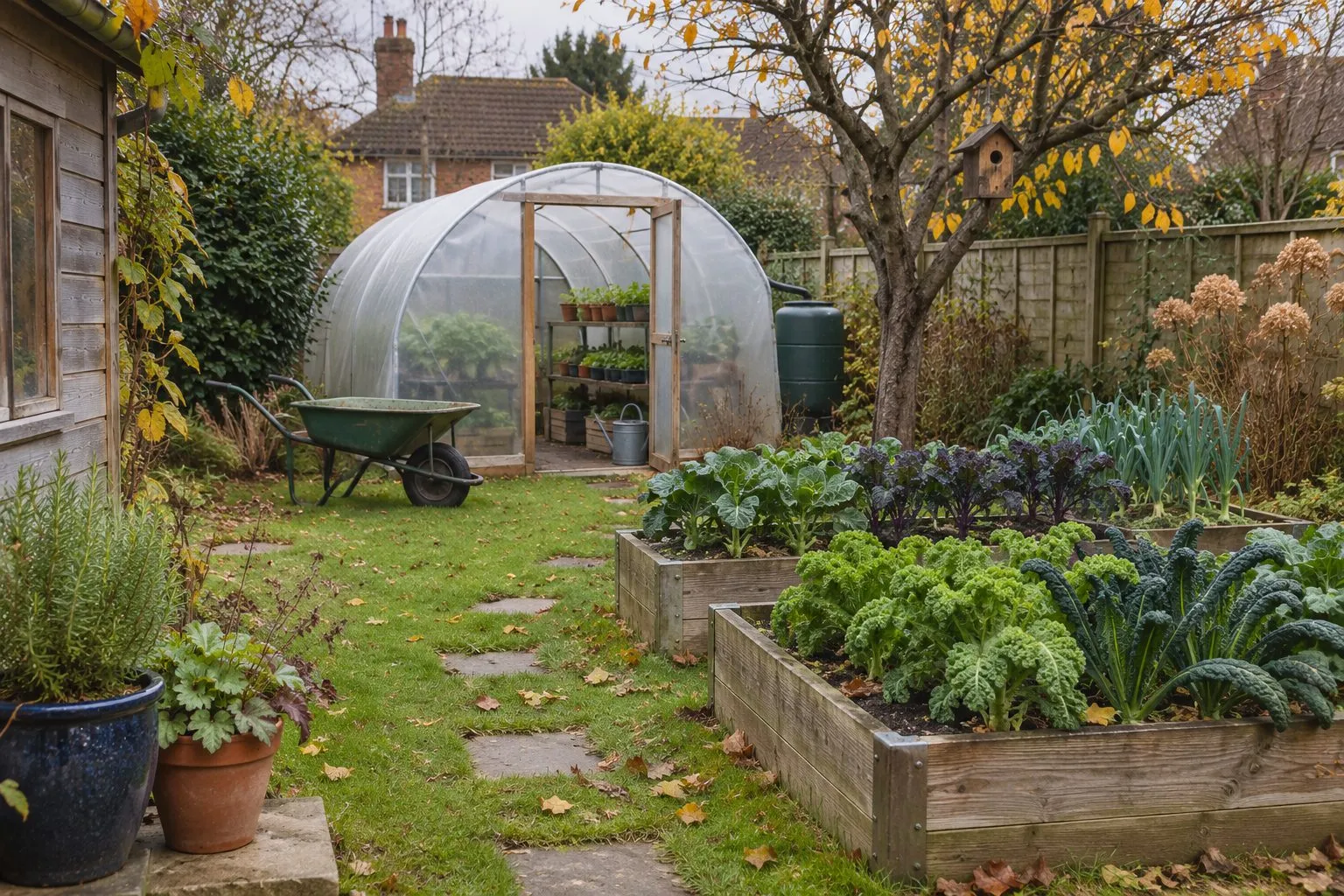
Both let you start sowing earlier, grow tomatoes and peppers in a British summer, and keep picking salads later into autumn. A polytunnel gives you more space for the money. A greenhouse is tidier, sturdier and lasts longer.
Buying through our links costs you nothing extra. Some of them earn us a small commission, and that's what keeps the site going: it pays for the time it takes to keep our picks and figures up to date. Thank you for helping. How we choose and how we earn.
What would you grow?
The RHS says an unheated greenhouse extends the growing season (opens in a new tab) at both ends. In summer it's the place for tomatoes, peppers, cucumbers and aubergines. In spring it brings on seedlings; in autumn and winter it can keep hardy salads going.
The RHS says heated greenhouses are rarely cost effective, so the figures here assume no heating.
If you mainly want earlier salads and somewhere to harden off seedlings, a low growhouse or cloche may be all you need, and costs far less. Try that first if you're not sure.
Side by side
Polytunnel
Greenhouse
Space for the money
More growing room per pound
Less, but neater
Cover
Polythene sheet, replaced every few years
Glass or polycarbonate, lasts much longer
Wind
Must be anchored well; the cover can tear
Needs a firm, level base; lighter models aren't for exposed spots
Looks
Practical, allotment-style
Tidier in a small garden
Best for
Growing a lot, on a budget, with room to spare
A smaller garden, and somewhere to sit among the tomatoes
Bases, delivery, groundwork and installation can all add to the price of the kit.
The real cost: more than the kit
The price on the page is rarely the whole bill. A greenhouse needs a firm, level base, which some kits include and others sell separately, and the groundwork, soil and gravel are on top. For a polytunnel, the cover, doors, base rails and anchoring options can add a lot to the starting price. Get a full delivered quote before you compare.
How long they last
Polytunnel covers wear out in sunlight and need replacing. Warranties vary: one maker gives 7 years on a 200-micron cover, another 4 years on its standard 150-micron cover. These warranties cover sun damage, not storm damage, so read what they include.
Greenhouse frames in aluminium don't rot. Toughened glass is stronger than standard horticultural glass and breaks into small pieces. Polycarbonate is lighter and won't shatter, but lightweight models can struggle in wind.
Exposed garden? Makers say which models suit windy sites and how they're anchored, which is worth checking before you buy.
Do I need planning permission?
In England, a greenhouse in the back garden of a house is usually allowed without planning permission, under "permitted development" rules for outbuildings. The Planning Portal (opens in a new tab) sets out the main limits:
one storey, with eaves no higher than 2.5 m
no more than 4 m high with a dual-pitched roof, or 3 m with any other roof
no more than 2.5 m high if it's within 2 m of your boundary
not in front of the house
outbuildings and extensions together must cover no more than half the land around the original house
You need permission if the home is a listed building, and different rules apply in conservation areas, national parks and other protected land. Flats and maisonettes don't have these allowances, and some homes have had them removed. The rules don't mention polytunnels by name, so don't assume one is exempt because it's plastic.
Scotland, Wales and Northern Ireland have their own rules. Wherever you are, if you're unsure, ask your council's planning department before you buy.
What else to look for
Vents: both get very hot on a sunny day, even in spring, so more roof vents and doors that open are a plus.
Water nearby: nothing inside gets rain, so a spot near a tap or water butt makes life easier.
Access: a low threshold and a wide door matter if you use a wheelbarrow or have trouble with steps.
From a first step to walk-in. Checked 15 November 2026.
Christow Large garden grow tunnel, 3 sections, 270 cmA small first step
Not a walk-in tunnel: a 2.7 m long, 92 cm high cover on a steel frame, with a zipped door on each of its three sections so you can tend one part at a time. It brings on salads and young plants earlier, and tells you whether you'll use a bigger one.
VonHaus Walk-in polytunnel, 3 x 2 mOur pickSmall walk-in tunnel
A walk-in tunnel 3 m long, 2 m wide and 2 m high, with a galvanised steel frame, a polythene cover held on with straps, a hinged door and roll-up mesh windows. It's a lighter garden kit rather than a trench-fixed allotment tunnel: it's held down with ropes, pegs and the cover's edges buried in the soil.
Size
3 x 2 m, 2 m high
Frame
Galvanised steel
Cover
Polythene (PE), fixed with hook-and-loop straps
Door and vents
Hinged steel-frame door; roll-up mesh windows
Anchoring
Ground ropes and pegs; the cover's edges are buried
Checked 15 November 2026. Groundwork and installation extra; the Mythos comes with a steel base.
Palram-Canopia Mythos 6x8 greenhouse, silver, base includedOur pickBase included
A 6 ft by 8 ft aluminium greenhouse glazed with twin-wall polycarbonate, which diffuses the light and won't shatter. It comes with a galvanised steel base, a roof vent and gutters. The door is 56.5 cm wide and 163 cm high.
Palram-Canopia Harmony 6x10 greenhousePolycarbonate, sheltered gardens only
Bigger at 6 ft by 10 ft, glazed with clear polycarbonate rather than glass. The shop says it's not suitable for windy or exposed positions, so it's for a sheltered garden.