Warming yourself costs far less than warming a room. An electric blanket or heated throw costs a few pence an hour; an electric heater costs around fifty.
Buying through our links costs you nothing extra. Some of them earn us a small commission, and that's what keeps the site going: it pays for the time it takes to keep our picks and figures up to date. Thank you for helping. How we choose and how we earn.
The free and cheap measures
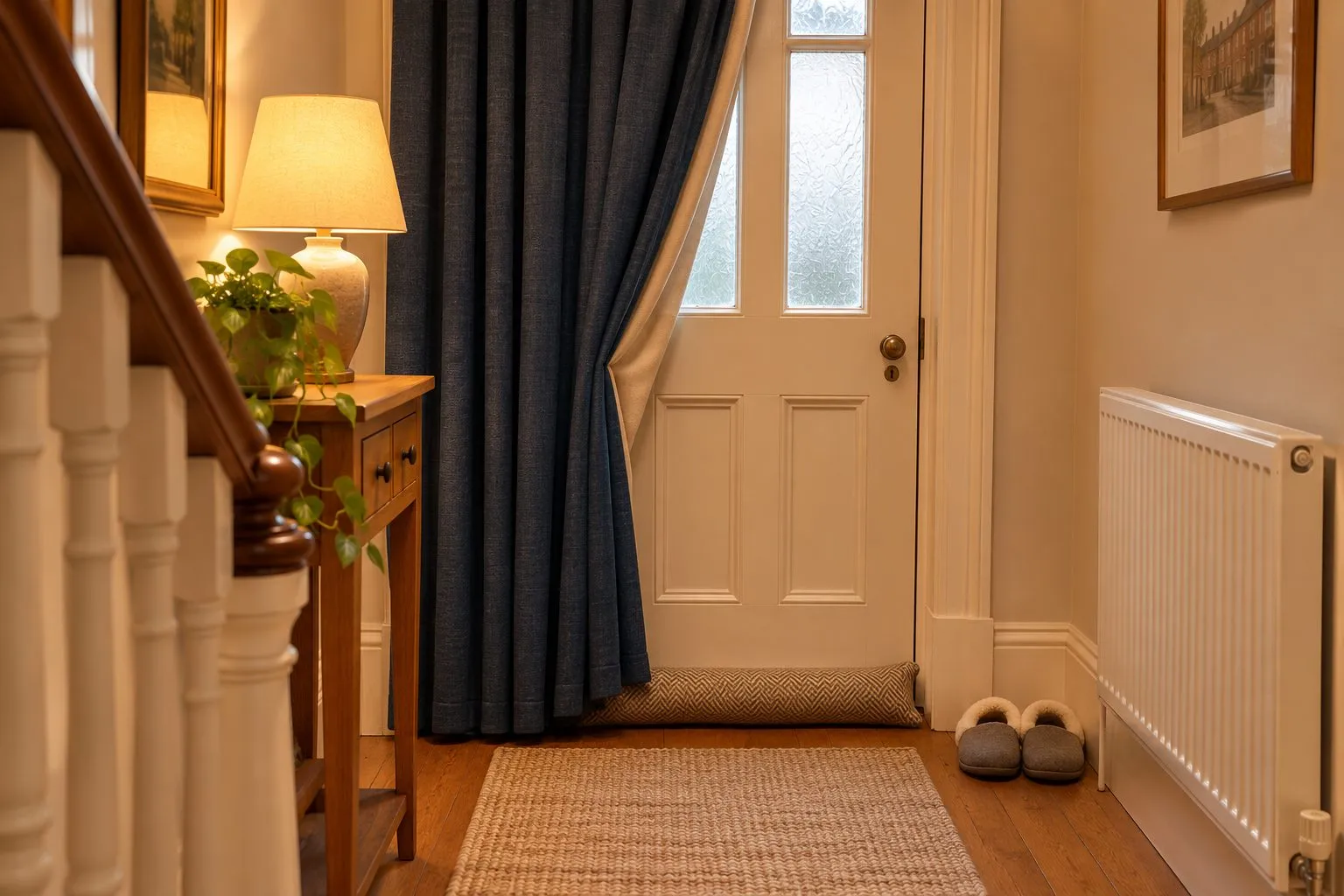
The Energy Saving Trust's warm-home guide covers the measures that cost little or nothing, such as thick or thermally lined curtains closed at night and stopping draughts. Energy Saving Trust: warm home hacks (opens in a new tab).
Warm yourself, but keep the room warm enough
A blanket or throw keeps you warm, but it doesn't warm the air or the rest of the home. The NHS suggests heating the rooms you use regularly to at least 18°C if you can, especially if you have a health condition, so personal warmth works best as a top-up. NHS advice on keeping warm (opens in a new tab).
What they cost to run
Cost for an hour at full power
Appliance
Rated power
Per hour
Beurer TS 15 underblanket (double)
85-100 W
2.2p to 2.6p
Silentnight Comfort Control underblanket (double)
70 W
1.8p
Beurer HD 75 heated throw
90-110 W
2.4p to 2.9p
Dreamland Snuggle Up heated throw
150 W
3.9p
A 2 kW electric convector heater (Dimplex 402TSTi)
2,000 W
53p
Rated power times 26.32p per kWh, the price cap rate for Direct Debit in England, Scotland and Wales, 1 October to 31 December 2026. On a lower setting, or once a thermostat cuts in, it uses less. The price cap now.
So a heated throw uses about 5% to 8% as much electricity as a 2 kW heater. An evening of four hours under the 150 W throw comes to about 16p. They do different jobs, though: the throw warms you, the heater warms the room.
A hot water bottle costs whatever it takes to heat the water. Heating 1.5 litres of cold water by 90°C takes about 0.16 kWh, about 4.1p a fill at the cap rate, a little more with the kettle's losses.
In a power cut, mains blankets and throws stop. A portable power station can run one for hours: see which ones last a day.
An electric underblanket lies on the mattress under the sheet and warms the bed.
A heated throw drapes over you on the sofa, for evenings when you don't want to heat the whole room.
A hot water bottle needs no electricity once filled, which helps in a power cut if you can still heat water.
Curtains and draught-proofing
The Energy Saving Trust says thick or thermally lined curtains help keep warmth in when they're closed at night, and that curtains shouldn't cover radiators. How much they save depends on the windows and how the curtains fit.
These go on the mattress, under the bottom sheet, and warm the bed.
Beurer TS 15 Double heated underblanketOur pickLow cost, known wattage
A simple double underblanket with three heat settings and straps to hold it on the mattress. Beurer publishes its rating (85-100 W), so you know what it costs to run.
Silentnight Comfort Control electric underblanket, doubleTesters' budget pick
Mumsnet, Ideal Home and Expert Reviews all chose it as their budget electric blanket. The current version has five heat settings and switches itself off.
Dreamland Hunker Down Scandi Sherpa electric underblanket, doubleBigger and softer
A bigger, softer sherpa double with a 1, 3 or 9-hour timer, and the Independent's best electric blanket overall. It costs more, and Ideal Home found its corner straps came off.
Up to nine heat settings (Silentnight's own page says three) and a two-hour automatic switch-off. The Guardian measured it at 3p an hour on its highest setting.
John Aird Thermal blackout pencil pleat curtains with tie-backs, naturalPencil pleat
Thermal blackout pencil pleat curtains for a track or a pole with rings, with tie-backs, in several sizes. John Aird gives 85-95% blackout, best in dark colours.
Size
Pairs in several sizes; this listing opens on 117 x 137 cm