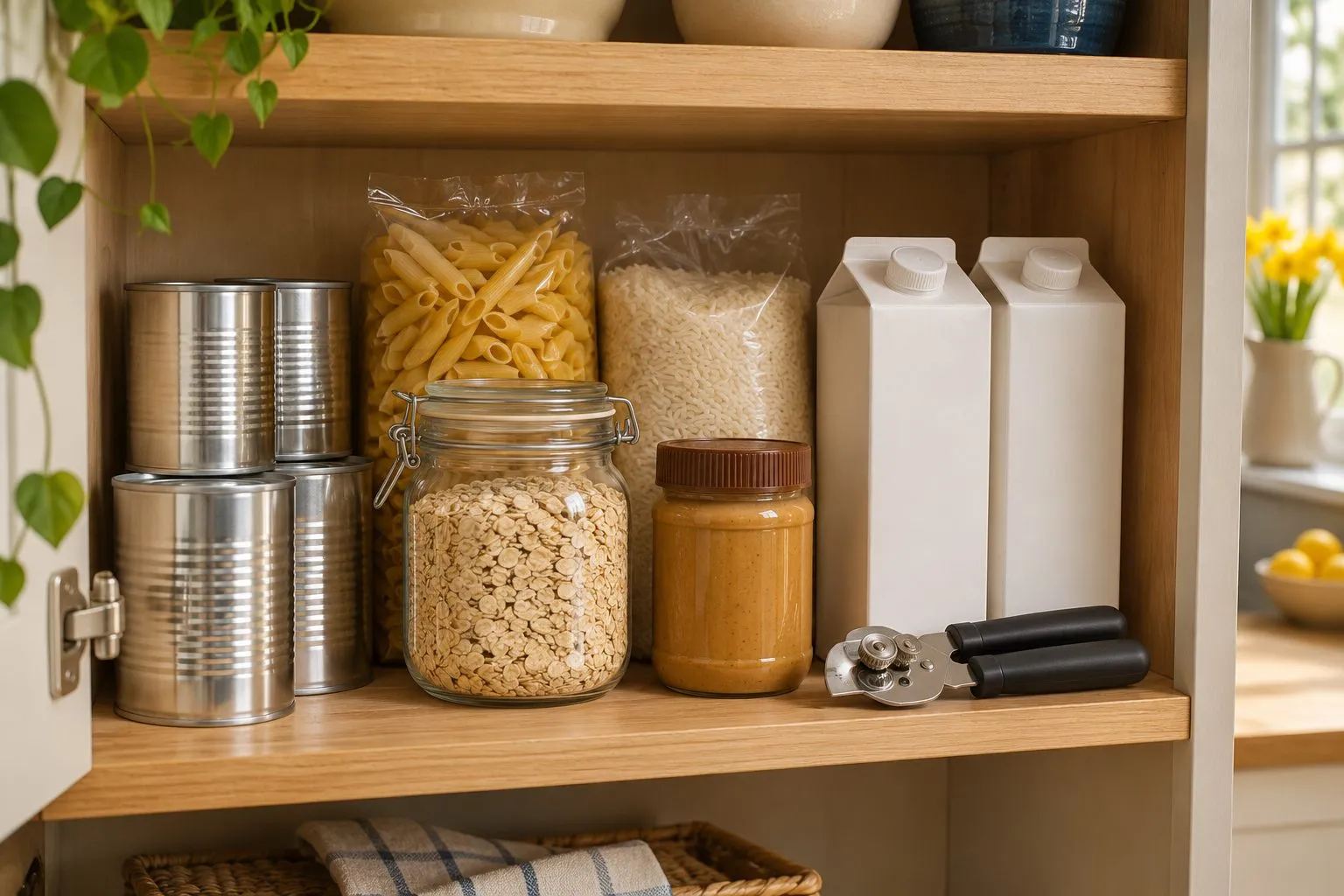
Emergency food stockpile list
No special survival food needed. A cupboard of the things you already eat, enough for everyone at home, with some you can eat without cooking. Build it up a few items at a time with the normal shopping. The list below sizes itself to your household; print it and take it to the shops.
Buying through our links costs you nothing extra. Some of them earn us a small commission, and that's what keeps the site going: it pays for the time it takes to keep our picks and figures up to date. Thank you for helping. How we choose and how we earn.
Your stockpile list
Enter a number from 1 to 30.
For 2 people for 3 days:
Breakfasts
- Breakfast cereal, porridge oats or crispbreads: enough for 6 breakfasts
- Long-life (UHT) milk or plant milk, in small cartons: enough for 6 breakfasts
Lunches
- Crackers or oatcakes: enough for 6 lunches
- Something to go on them: tinned fish, peanut butter, spreads in jars: enough for 6 lunches
- Tinned fruit, fruit pots or dried fruit: enough for 6 lunches
Evening meals
- Ready-to-eat tins or pouches: meat, fish, beans and pulses: enough for 6 evening meals
- Tinned vegetables: enough for 6 evening meals
Drinks, snacks and the rest
- Drinking water: at least 18 litres
- Tea, coffee and long-life juice
- Biscuits, cereal bars, nuts and chocolate
- Food for special diets, allergies, babies and pets
- A manual tin opener Tin openers on Amazon (opens in a new tab)
- If you can cook (a gas hob or a camping stove outside): rice, pasta and dried lentils, and water to cook them
Water at 3 litres per person per day for drinking; add more for cooking and washing. Choose foods your household already eats, and check the label says a tin is ready to eat if you'll eat it cold.
Three days, or two weeks?
The government's Be Ready (opens in a new tab) advice is to keep food for three days that lasts a long time and needs neither a fridge nor cooking. That's the starting point for every home.
Two weeks is our suggestion. It makes sense if you live somewhere a storm, snow or flooding can keep you at home for a while, if getting to the shops is hard, or if you'd just rather not depend on them. Get to three days first, then keep going.
Planning it
The British Red Cross suggests planning for each meal and each person (opens in a new tab). For two weeks, that's 14 breakfasts, 14 lunches and 14 evening meals per person, at their normal portions. A cupboard that works usually has:
- meals the household already likes, since food nobody wants to eat is wasted money
- some meals that need no cooking at all
- food for special diets, allergies, babies and pets (for a baby, the government suggests ready-to-feed formula, which needs no boiled water)
- drinks and snacks: tea, coffee, biscuits
- a manual tin opener
Food that needs no fridge and no cooking
The government's own examples are tinned meat, fish and vegetables, dried fruit and nuts. Other familiar foods that keep in the cupboard and can be eaten as they are include:
- tinned fish in oil or sauce, tinned meat, and tinned beans and pulses labelled ready to eat
- tinned fruit, fruit pots and long-life juice
- crackers, oatcakes, crispbreads and breakfast cereal
- long-life (UHT) milk or plant milk, in small cartons you can finish in one go once opened
- peanut butter, jam, honey, and spreads in jars
- cereal bars, biscuits, chocolate
Some tins and pouches are made to be heated; the label says which.
Rice, pasta, flour and dried lentils are good stores too, but they all need cooking, and pasta and rice need water. They're an addition to the no-cook food rather than a replacement.
Water
The government advises 3 litres per person per day for drinking, and more for cooking and washing. For two weeks that's 42 litres per person for drinking alone. Bottled water from the shop is the simplest store. More on storing water and what to do when the taps stop.
Rotating stock
A store cupboard only works if it's eaten and replaced. Otherwise it quietly goes out of date at the back.
The usual way is new shopping at the back and the oldest dates at the front, built up by buying one or two extra of the things you use every week rather than in one big shop. The government suggests checking the dates every six months.
Use-by and best-before
They mean different things. According to the Food Standards Agency (opens in a new tab):
- Use by is about safety: the FSA says food shouldn't be eaten after its use-by date, even if it looks and smells fine.
- Best before is about quality: food past its best-before date is usually safe, but may not be at its best.
When the power goes off
From the Food Standards Agency's advice on food in a power cut (opens in a new tab):
- How long things stay cold: with the doors shut, the FSA estimates a fridge stays cold for up to about 4 hours, a full freezer keeps food frozen for up to about 48 hours, and a half-full one about 24 hours.
- What to eat first: the FSA's order is food from the fridge, then defrosted frozen food that doesn't need cooking, then fresh food kept at room temperature, with tins, jars and dried food last.
The FSA page has its full advice, including temperatures and defrosted food.
Cooking in a power cut
Electric and induction hobs stop when the power does. A gas hob may still work, though some with electric ignition won't.
A camping stove or barbecue will heat food and boil water, and both are made for outdoor use. Cooking on them takes a little longer than on a hob. Choosing a camping stove for a power cut.
A portable power station can keep the fridge-freezer cold through a cut, but it won't run a kettle or an electric hob for long. See which ones would keep a fridge-freezer going for a day.